Friday, February 20, 2009

Dive Phase

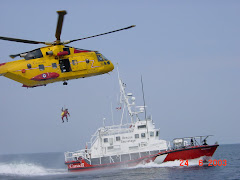
Dive phase is done. The past 4 weeks were spent at the Fleet Diving Unit (Pacific) at the Navy base in Victoria, BC. I was not looking forward to this phase. Having already done the Ship's Team Diver course when I was in the Navy I had a pretty good idea of what it was going to be like. Thankfully the SAR Tech dive course was not run like the STD course even though it is a very similar course. The PT was a little harder on this course but the days weren't as long and there wasn't anywhere near as much cock. That had to do with the calibre of the guys. These guys are all fast learners and we're used to strict timings so that helped keep the staff off of our ass as much as possible.

We learned the basics of military diving and getting comfortable in the water and using the kit. We spent some time getting familiar with the burpee as well as the dreaded morning swim. There is a tradition at FDU that every course in house has to race the clearance diver course. The race consists of a 2400m run followed by a 1000m swim. If you get below 8 minutes on the run or 14 minutes on the swim your name goes on a plaque in the training building. Myself, Jeff and Giles managed to get under the 8 minutes for the run and we weren't able to get anyone under 14 on the swim although Zuko and Christophe came close. Since the times are taken as a team average and we have 16 guys whereas the CD's only have 9 it was pretty much a forgone conclusion that we were going to lose the race which is exactly what happened. The CD's have wetsuits that are much quicker to put on and they've been on course for 6 months so they've had a lot of practice. I was the first guy into the changeroom to get into my wetsuit but 7 clearance divers were in the water before me. Their entire course was in the water and swimming by the time Auger was but he managed to pass all of them on the swim for a first place finish. It's the first time I've ever heard of someone other than a clearance diver winning the race.

The rest of the course consisted of deep diving, towed diver searches and crab fishing. The towed diver search is when the diver gets on a sled that looks like a plane and is towed behind a boat. It has wings and you can go up, down do barrel rolls or whatever. It's fun but it's pretty tiring since you have to hang on while being towed underwater. The crab fishing was a blast. I've never done it before and it was pretty fun to find them buried in the ocean floor and then catch them as they run away or try and pinch you.

Next week we go back up to Comox to start Over Turned Vessel Extraction. That's the bread and butter of SAR Tech diving. What we've been doing up until now is getting proficient with the gear. OTV will have us penetrating capsized vessels and pulling survivors out. I'm super pumped about the idea of going inside a sinking ship, finding people and bringing them out. Should be a blast.

Saturday, January 31, 2009

Sunday, January 25, 2009

Arctic Survival

Well 42 is fresh back from Resolute, Nunavut after doing some survival training in the Arctic. Resolute is about 600km south of the north pole. It started out on a good note being that all the Herc's were tasked out so we were able to charter a 737 to take us up there. In-flight meals and some sleep go a long way.

After getting to Resolute we marched to the Narwhal hotel where we would be staying for a few night. All the kit was shipped over on palettes by forklift. After getting the hotel brief and sorting out some kit we ate supper and proceeded outside to learn some stuff. Arctic lanterns which can be used as a signal (basically a pylon of snow with a candle in it), are surprisingly bright. Especially in a place where the sun does not shine. We spent two nights in the Narwhal with the days spent outside learning how to build makeshift shelters and basically just spending time outside trying to get used to the environment. The snow up there is extremely dry. It's just too cold. But because of the wind it gets packed very solidly and feels like styrofoam. It can be cut like wood into blocks or whatever you want. It's very strong providing you aren't too rough with it.

On the third day we walked out to Crystal City which is a detachment of CFSSAR to begin Arctic survival. Following the survival pattern which is first aid, shelter, fire, signals, food, water. We began to construct snow walls to put our SAR tents in. What a pain in the ass. It takes well over 100 snow blocks to have enough to shield your tent from the wind. The tent is also extremely cold to sleep in up there. That being said it should only be used as a temporary shelter. If you're going to be up there for more than 24 hours you should think about constructing something more permanent such as a snow cave or igloo. Which brings us to day two. Snow caves. At the start of every morning we go for walks with the inuit to learn. Navigation by stars and snowdrifts depanding on prevailing winds, what type of snow is good to melt and drink, and even how to dodge polar bears charges. The snow cave took all day to dig and since it needs to be quite confined in order to provide some insulation, most of that digging gets done in very awkward positions. The snowcave was the warmest (relatively speaking of course...... nothing is warm up there) or all the shelters, but it was uncomfortably small. Try getting out of a dual layer sleeping bag and bivy bag without waking your buddy in a space just big enough for the both of you and only about a meter high, than having to crawl down a tunnel to pee into a block of snow (called a kovik) and then having to climb back up and into your bag again.

We stayed two nights in the caves. I slept about 12 hours the second night. The instructors told us a storm was coming and to get into our caves and just get some down time. An exercise to see how comfortable we would be if we had to stay an extended period of time in the shelter which is exactly what you would do in a survival situation. It was okay. Then it was on to the construction of igloos. We watched the inuit build an igloo and then immediately build our own. I love the way this course is run! You watch a demo and then immediately turn around and employ it to make sure you've absorbed the info. Best be a quick learner on this course. Anyway the igloos were by far the easiest shelter to make. Less grunt work but way more skill required. I would have like to have had the time to build a couple more just to get it down. Turns out the igloo provides a little bit more room but Matt & I's was cold. I don't think we took the time to properly insulate the inside. Although most of the guys were cold in the igloo so maybe it wouldn't have helped.

The morning after the night in the igloo a storm hit. It was crazy. 70km/h winds dropped the temp to around -50 C. Our morning walk and days activities were cancelled and we were told to just stay inside the igloos. Eventually the exercise ended and we went back to the Narwhal hotel but due to the weather out plane couldn't land so we got stuck up in Resolute for 3 extra days. That was fine since we all needed the downtime prior to dive phase but it would've been better spent at home with our families.

Saturday, January 10, 2009

Winter Ops

Another phase down. That makes 3 so far since Ground Ops doesn't count since we're technically not done it yet. This phase was mostly geared towards moving in the backcountry, as well as identifying avalanche probability areas and avalanche rescue. This training includes downhill skiing, alpine touring skiing, winter living in a camp setting (vice survival setting as on selection), avalanche skills training and avalanche rescue. The brunt of the course was geared toward the avalanche skills training course. We can now dig snow profiles and identify strong temperature gradients which cause faceting (this is bad), and can conduct a series of tests to more accurately assess the weak layers in the snow pack and and what level they will fail at. We also did a lot of training with avalanche rescues using the 3 minimum things you should carry into the backcountry, those being a shovel, probe and, transceiver. Phil Friolet was the fastest with a time of 1:17. So in just over a minute he was able to locate a casualty and dig them out in an area about 25m wide and 50m long. Everyone was well under the max of 5 minutes which is reassuring since you typically have 15-20 mintues assuming you don't carry any gucci shit that will prolong your survival time.

For myself the best part of it was the camp routine stuff. Having come from the navy I had never spent anytime in the field let alone in the field during winter. So to see how things should be or how they could potentially be done was a good learning experience for me. The highlight for myself was getting to sleep in a quinzhee which is basically a snow cave. The instructors said "who wants to sleep in a quinzhee?" I raised my hand but at the same time was thinking 'what the fuck is a quinzhee?' Anyway we built it by digging down, putting everyone's rucksacks in the middle as to reduce the amount of snow we would have to dig out and piling a shitload of snow on top and packing it down. We kind of over did it since in the end the walls were about a metre thick when they really only need to be 30cm. Regardless I was fucking cooking inside of that thing. I started out with long underwear top and bottom, fleece top and bottom and a toque inside my dual layer sleeping bag. Within an hour I was just down to the long underwear, no toque and my head and one arm were out of the sleeping bag. A good confidence builder for me to see how well snow insulates.

Anyway that's another phase down and next up is the Arctic phase. It is a survival course and as such they don't tell us anyhing except what to bring. Everything else is about reacting. One thing I do know is that it's going to be fucking cold. This is a picture of the 3 of us who didn't puss out and sleep in tents.

Wednesday, January 7, 2009

A days itinerary

This is an itinerary of a normal day for me on this course. This is nowhere near the most hectic day we've had so keep that in mind that this is totally a normal day.

0600-Wake up. Brush teeth. Shit, shower, shave. Get dressed. Put on Metallica on iTunes. Check email.
0635-Go eat breakfast.
0710-Go to the school. Do 10 chinups. (Chinups are mandatory whenever you enter or leave CFSSAR as a student). Once inside gaggle around until bus arrives.
0815-Bus is late. Finally depart CFSSAR to Mt. Washington for a day of training on the ski hill.
0910-Arrive at the hill. Receive skis, boots, and poles.
1000-Mandatory ski lesson.
1030-Released from ski lesson to ski freely.
1145-Lunch
1205-Ski
1500-Return equipment
1530-Bus arrives. Depart back to CFSSAR.
1615-Arrive at CFSSAR. Go inside to drop off kit.
1616-Do 40 enforced chinups for not doing any on the way in.
1625-Start sorting out the days kit as well as tomorrows kit.
1630-Interrupted to forcibly lift broken snowmobile on to trailer.
1635-Resume kit management.
1645-Run to post office to get package since they close at 1700. Do 10 chinups.
1650-Return from post office. Do 10 chinups.
1655-Receive kit list for the next days trip into the back country on alpine touring skis.
1715-Do 42 pushups.
1720-Leave school. Do 10 chinups.
1720-Brush teeth. Shower. Get into civies.
1735-Throw laundry in washer.
1740-Go eat supper.
1810-Put wash in dryer.
1820-Go to school. Do 10 chinups.
1830-Start sorting out kit for the next few days, as well as the following 2 weeks in the arctic on a survival course, and organizing for dive phase which follows the arctic. Am met by 5 other students doing the exact same thing.
2015-Leave school. Do 10 chinups.
2020-Remove laundry from dryer. Fold and put away.
2030-Call loving girlfriend. Hear about how she misses me and how she made juice with beets in it.
2045-Study for next days exam on avalanches.
2130-Brush teeth. Take a whiz. Wash hands.
2135-Go to sleep.

Thursday, December 25, 2008

Happy Holidays!

Happy holidays and Merry Christmas to everyone. Med phase is officially done with all 16 of us successfully finishing our practical ambulance time without killing anyone (always a good thing). Working on the ambulance was a great experience that allowed us to actually apply the months of knowledge and to use the improvisation that SAR Techs are reknowned for. It was kind of crazy actually since we only learn to deal with a certain amount of injuries/illnesses when in reality there is sooo much more you have to be prepared to deal with. Common sense plays a huge role. I haven't talked to all of the guys but the general consensus from the paramedic preceptors that I had were that, they absolutely love getting the SAR students. A lot of them won't even precept the regular civilian paramedic students and only precept SAR Techs. My only complaint about the med phase as a whole was that we didn't get enough practical time. I'm sure the rest of the course would agree that they would like the time to become a better paramedic.

A lot of people have been asking me if the course is over now. Noooo way. We've just finished the medical portion. The medical aspect of it is by far the most important part of being a SAR Tech. Everything else is just a vehicle to get guys to a rescue scene and administer medical aid. That being said I don't know a single guy who has done this to be a paramedic. We do it to jump out of planes, climb mountains, and dive. And that's all the stuff we have coming for the rest of the year up until June. First up is Winter Ops and I honestly don't have a clue as to what I'm going to learn during that phase. After that is Arctic Ops. I look on that phase as a mixed bag. I'm super excited to just be going to the Arctic and learning survival up there but -50 celcius is bloody cold when you don't go inside at all and sleep in snow caves. Hahahha we'll see how it goes!

Sunday, November 30, 2008

1/3 done!

So med phase is done with a 100% pass rate and everyone is now a qualified paramedic. The course is scattered throughout the island and mainland doing practical training with the BC ambulance service. I am really looking forward to this portion of the course. I'm stationed in Victoria for the duration of this phase which allows me to see Ewa everyday and sleep in my own bed. Some guys aren't so lucky as they are in Vancouver for 4 days, then Port Alberni for 4 days and then Victoria.

The final tests on this phase were as easy as can be. Not because they're actually easy but because the instructors ensure that by that time we are more than prepared for them. On the final written exam there wasn't even an A-, everyone passed with an A or higher. I think I've mentioned it before but this is a condensed version of the normal PCP course. The normal one is 5 months, and the SAR PCP course is 3 months but it is the same course. It speaks volumes the level of compentency the guys on this course have to be able to learn this much material AND be able to practically apply it in such a short amount of time.

The last day before we all disappeared to go on our ambulance phase we had a pre-Christmas party party since not all of us will be around come Christmas time. Check out the video:


After Christmas/New Years break we start to get into the good stuff. Winter ops. Arctic Survival. SAR diving. Freefall parachuting. Mountain ops. Man I can't believe this is a real job.

Saturday, November 22, 2008

So close

Well medical phase is almost over. One more week until we're all fully qualified paramedics. After that we'll be doing a mandatory stint on the ambulances around the island. I'm really looking forward to that. We'll be able to really apply our procedures to actual people. The hospital ER time is good and all that, but that only allows us to practice a very limited amount of what it is a paramedic does. Hospitals are controlled environments where everything you could need is at your disposal. Paramedics work in the pre-hospital setting where other factors come in to play. Distance from a hospital, traffic, environment, equipment limitations, etc... And it goes without saying that as a SAR Tech all those complications are only compounded since you might be stuck on a mountain or in the arctic attending a patient for a week.

The past few weeks has all been in preparation for our finally series of tests. And as always there's a written test that accompanies the practical ones. These calls are the fun ones (at least when you're "pretending") because they make you think about what's wrong with the patient and how the treatment you're providing might affect them. For example you have an old fart who's smoked all his life and has bad emphysema which causes him to get short of breath. We can do something about that, but if he has a history of heart problems the drug we give for his shortness of breath could potentially cause undue strain on his ticker.

That's all I got for now. Here's a closing picture of Giles (the last guy you ever want delivering your child) practicing delivering a baby. Apparently he's expecting some nasty shit to go down because he's wearing every piece of protective equipment he could find.

Monday, November 10, 2008

ER time

So myself and three other guys (Tony, Christian, Phil on Saturday and, Mark on Sunday) just got back from Nanaimo after a weekend working in the hospital ER. All I can say is holy shit what an experience. For one it was just really cool to be able to apply some of the knowledge and skills we've learnt over the past few months on people who are truly ill opposed to super healthy SAR students.

We dealt with all sorts of injuries/illnesses from young girls crushed by horses, obstructed bowels, heart attacks, meningitis, narcotic overdose, logging accidents, tuberculosis, etc.... I was thrown up on a few times, one by a guy in SEVERE pain from an obstructed bowel and another time by a 61 year old female. She had a history of alcoholism and had some hematemesis (a fancy word for vomiting blood that I like to throw around). So yes I had a woman vomit blood on my hands and arms. Rad. We all got some experience starting IV's, giving fluids and drugs. Having now tried to start an IV on a senior I have a newfound respect for nurses. Most of them are utterly amazing at their jobs, but one thing I did notice is the sense of detachment that most of them have. I can understand how being saturated by people in pain or even on their death bed would instill that in you.

By far the most profound experience of the weekend involved a man we'll call patient X. This guy was messed up. He had a heart attack the previous day and after a CT scan it was found he had a giant aneurysm in his abdomen as well as a huge clood clot and a build up of plaque (atherosclerosis) in his aorta just below his kidneys. So all his major organs were still receiving blood but not his legs. His legs looked like they were dead. They were cold and ashen and he had no feeling below his belly button. X had said that he never goes to see the doctor. Anyway around 1615 later that day I went in their to see what was up and there was my two friends Christian and Mark doing CPR on this guy why nurses and doctors were running around the bed. My initial reaction was "holy shit........." I then put my gloves and looked for a place to observe the whole thing. Our clinician was pumped and so was I. He asked me if I wanted to give the guy chest compressions to which I said "fuck yeah". Anyway Christian had broken X's sternum in a couple places which is what usually happens if CPR is done right and actually allows for more effective compressions. The doctors established an IV in his femoral artery which was kinda useless I think since he was getting no circulation to his legs anyway and another one in his jugular vein which looked to be an extremely difficult procedure given that we were doing CPR on him. When I finally got up there to give him compressions I just zoned out at first concentrating on giving good compressions, but after I got the rythym of it I started to take it all in. I was looking at him and thinking to myself "this guy is dead, we're beating his heart and breathing for him is all". I did about 3 minutes of compressions on him and then they stopped to assess the patient. I switched out with Tony so he could have a crack at compressions. It wasn't to be though because the doctor called it. I beat X's last heart beat for him. We were all super excited and we went to talk about the whole thing and discuss what was happening and what we were all trying to do for him.

So unfourtunately X didn't pull through but it did have some definite benefits for us. Actually doing CPR in itself was a massive experience and a little more disspationately it was a good experience to see someone you've tried to help die. As a SAR Tech it is something we will deal with, but better deal with it now then on the side of an icy cliff.

I'll say it again and not for the last time. Best job in the world.

Christian Part 1

Thursday, October 30, 2008

Getting tired......

What up. OK so quick update on the course. Thing are moving long at an increasingly rapid pace. We're into medical situations now and we (at least myself for sure) are getting saturated. With pre-hospital care as a paramedic you have a set of protocols that dictate how you treat someone based on certain criteria. At first it was pretty simple but as we move along there are more and more protocols to remember and it's starting to get hard for me to remember every little thing about them. You can only give Ventolin if they have a history of this but can't if they're allergic to it, or you can give ASA for chest pain if they don't have any of these 4 things and nitroglycerin if they don't have these 4 things and their blood pressure is above this. This is actually the easy stuff for me. I know that I can manage a patient fine in a practical setting regardless of what it is so long as we've been taught it. The problem I have is with the studying at night. I prioritize like so: practical is most important since in my mind premium care for you patient is vital. Whereas knowledge, ie. knowing what causes acute renal failure is secondary, since in my practical mind set I should only have to know the signs and symptoms of ARF and how to treat it. This causes a problem since I spend all my "spare" time concentrating on the practical aspect of this phase when I should be devoting the majority of it the theoretical portion as there is a lot more to cover.

Anyway the course is going fine. According to the instructors they haven't seen a course get out as early as us (which is still around 4:30-5:00PM) consistently in years. I have to admit it's pretty cool to be here and be a part of it. I was talking about this with my girlfriend last weekend when she asked me if we (the course) were generally a cocky group of guys and I had to explain to her why we aren't. In the Navy I'll openly admit that I was confident and borderline cocky and I think it was because of the environment I was in. The majority of the people aren't physically fit, let alone to my standards and less than half are proficient at their jobs let alone excellent. So someone who IS fit and DOES excel........ it's hard not to get an exaggerated opinion of oneself. But here on this course it's easy to stay humble because you are challenged every day. You are surrounded by people that are in better shape and more knowledgeable than yourself in any given aspect. The instructors are second to none and are critical of the students' performance at all times. And just in case we can't keep ourselves in line they constantly remind us "you're doing good........ BUT don't let up". It's weird to hear stuff like that from them but when it happens I feel like a dog whose been given a treat for good behaviour.

Anyway that's about it. Tomorrows another day and I need to get back to studying instead of procrastinating which is why this entry is so fuckin' long.

Peace.

Saturday, October 18, 2008

Halfway pt. 2

So you probably watched the video by now and seen how Christians arm bled when I pulled the needle out. That was my bad of course since I didn't have any gauze ready to put over it. Besides that the course is going along swimmingly. It's hard to believe that we're already halfway through medical phase, 50% closer to being a paramedic, and a long ways off from being a SAR Tech. We still have para phase, dive phase, mountain ops, sea ops, winter ops (avalanche rescue) and of course, arctic ops. So all the cool shit is yet to come but it's important to realize that all that stuff is just a vehicle to get us to the scene so we can administer medical care. We should be starting our hospital time in local ER's in the next few weeks so that will give us some much needed practical experience. I'm already nervous about it though. It's easy to stick needles in SAR candidates since they will suffer through anything, but I imagine it's a different story when you're dealing with some crabby hag or drunk guy who's pissed off for a dumb reason. Typically nurses are extremely caring and understanding but I'm anxious to see what happens when you stick 16 intense dudes in that setting and let them play with needles and stuff.

So all in all everything is going as planned. The pic here is of selection back in Feb 08. If you recall we had to survive with no food for 4 days in the mountains north of Jasper. One of the tasks we had to do during that time was build a ground-to-air signal fire in the event you see an airplane. The smoke has to reach tree-top level in a minute or less or you fail. Good times that I'm glad I'll never have to do again!

Halfway through med phase update pt. 1

Saturday, October 11, 2008

One more tick in the box.

Thanksgiving marks another part of the course behind us. The past 3 days has been spent testing the course on the medical knowledge we've accumulated so far. Wednesday was a written exam and Thursday and Friday were practical exams. We were tested on our ability to follow the patient assessment model for limb injuries (in this case a broken leg) as well as CPR and defibrillation. We've had plenty of time to practice and the tests were pretty easy by the time we actually did them. Everyone passed all the tests with no serious problems.

On a bright note Ewa is back from her 7 month deployment with the Navy. I drove down to Victoria to meet her when she got back and we spent the week up here in Comox at an oceanside cabin. She has a ton of pictures from Malaysia, Dubai, India, Japan, Spain, etc..... It looked like a pretty good deployment but I'm just glad she's back!

Saturday, October 4, 2008

Friday, September 26, 2008

Sunday, September 21, 2008

Med update

OK so we're into the thick of med phase now and it's all good. We're just doing some basic stuff right now to get the procedures to become a habit. I've done all of this before since I was lucky enough to get an advanced medical first response course. But this week we start to get into things I haven't covered before. Pain management using Entonox (laughing gas), which of course we have to understand it's effects in order to use effectively. So that means we will all be sucking back on some laughing gas and I will be sure to get some video footage of that. Also we start doing pharmacology and IV administration. I'm really looking forward to that. I've never put a needle in someone and then forced drugs directly into their bloodstream. Muuuuaaahahahha!

Also the picture below is of two guys (Geoff and Eric) while we were learning how to properly auscultate (fancy word for listen) to someones breathing. It just worked out that they were making the gayest faces ever when I took it. Add a caption and some bordering and walla! Magic.

Wednesday, September 10, 2008